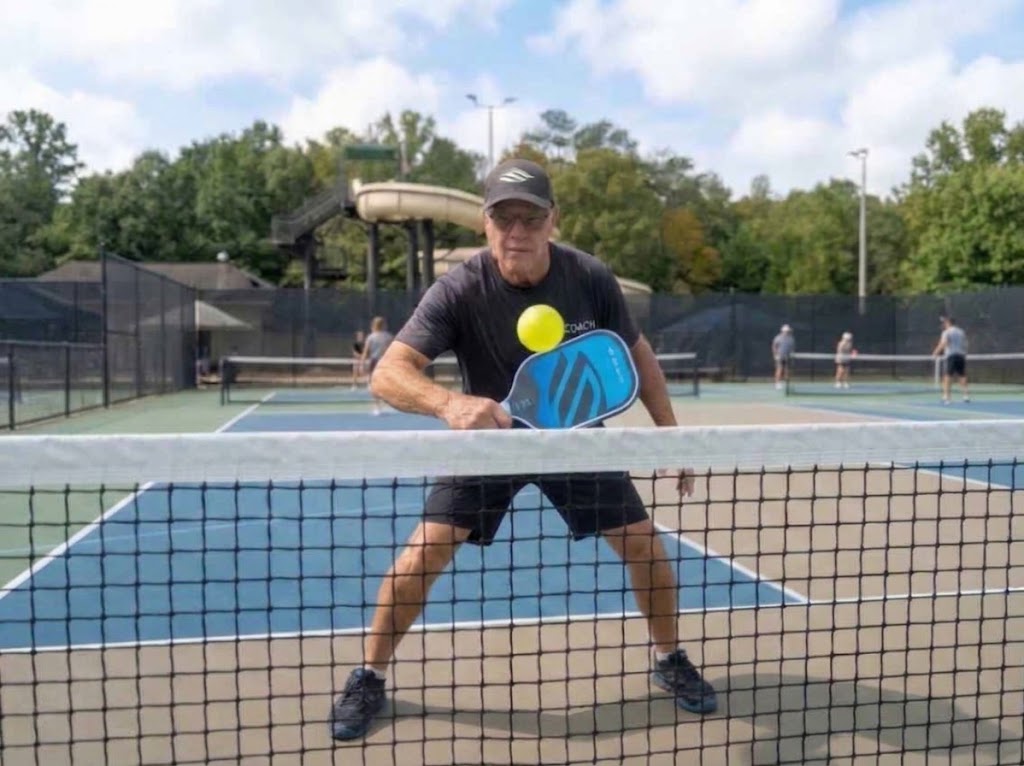
Pickleball Volley Tips Cary 3.0-3.5 Players Can Use
Pickleball tips
Pickleball Volley Tips Cary 3.0-3.5 Players Can Use
RL
Russ Lombardo · Pickleball coach in Cary, NC
If you are a 3.0-3.5 player in Cary looking for practical, game-ready volley improvements, here are the specific habits, footwork cues, and drills that make the biggest difference. I am Russ Lombardo, and below I share the same pickleball volley tips Cary players hear from me on court so you can clean up contact, win more hand battles, and hold the non-volley zone with confidence.
Volley fundamentals I teach first
At the 3.0-3.5 level, most volley problems trace back to two things: preparation and contact. I coach my students to build a reliable foundation with these checkpoints:
Ready position at the kitchen: paddle head up at chest level, elbows relaxed in front of the ribs, tip of the paddle slightly toward backhand.
Compact stroke: think short punch or soft catch, not a full swing. Shoulder leads, wrist firm.
Contact point: out in front of your chest about 12-18". Any closer and you'll jam yourself. Any further and you're fully extended and won't have anything left to punch at the ball.
Paddle face slightly open if not perpendicular to the ground.
Quiet feet at contact: split step before the opponent hits, then one small adjustment step into the ball.
Eyes and breathing: soften your gaze to see the ball early, exhale through contact to stay relaxed.
These sound simple, but once you apply them, your volleys stop sailing long, popups shrink, and resets start falling where you aim.
What should a 3.0-3.5 volley actually look like?
A clean 3.0-3.5 volley is compact, balanced, and purposeful. For a neutral rally ball, your paddle path is short and linear, about 4-6 inches. On a fast drive at your body, you often do less: angle the face, soften the grip, and let the ball rebound, falling gently into the opponent's NVZ (Kitchen). On a sitter above net height, add a firm step and punch through a target, not just “hit it hard.” The difference is intention and control rather than swing size.
The four volley types you need in Cary rec play
I break volleys into four categories for my students around Cary parks like Carpenter Park, Ed Yerha Park, and McCrimmon Parkway Neighborhood Park. Master these and your kitchen game steadies fast:
Block volley: For handling bangers. Continental grip, soft hands, face slightly open, let the pace do the work. Aim middle third of the court to reduce angles.
Punch volley: For finishing sitters. Firm grip for a moment at contact, short extension, think through-your-target to deep corners or the opponent’s backhand hip.
Catch-and-set reset: For neutralizing fast, low balls. Loosen grip to a 3-4 on a 10 scale, small give with your shoulder, flat face, land it in the kitchen.
Roll volley: For attacking shoulder-high balls. Slightly closed face, brush up and forward, drive it down to toes or deep middle.
Each one serves a different job. The match is easier when you pick the right tool for the ball in front of you.
About the coach
RL
Russ Lombardo
Pickleball coach in Cary, NC
Helping new and experienced players learn and improve your game, focused on the Cary, NC area, including Durham, Raleigh, Apex, Morrisvillle
I help pickleball beginners build confidence and learn the game, while helping experienced players sharpen their skills, strategy, and consistency. Whether you're picking up a paddle for the first time or working toward a stronger all-around game, I create personalized lessons around your goals. In Cary, North Carolina, and nearby communities, I coach with a relaxed, welcoming approach that keeps learning productive and enjoyable. I am a PCI-certified Pickleball coach with five years of coaching experience. We can work on grips, serves, returns, dinks, court positioning, shot placement, resets, and handling different styles of play. Each lesson combines targeted drills with gameplay, so you can practice skills in action. As a Selkirk Advocate, I can provide paddles to demo and help you find a good fit. With a 5.0 rating from 113 reviews and 156 completed lessons, I would love to help you enjoy Pickleball and play with greater confidence. Book a lesson and let's get started.
Footwork that wins hand battles at the non-volley zone
Good volleys come from your feet as much as your paddle.
Split step timing: When you're transitioning to the NVZ, land your split right as your opponent contacts the ball. If you land late, you will reach and pop the next shot.
Micro-steps, not lunges: think two 3-inch steps instead of one 12-inch reach. Your base stays under you.
Weight forward but not falling: nose over toes, but heels light, then freeze your head through contact.
Cover middle with your feet, not your arm: two inches of foot shift saves you six inches of stretch.
Where should I aim my volleys?
Target choice is the easiest way to upgrade without changing your mechanics. Here are my high-percentage targets at 3.0-3.5:
Deep middle on neutral volleys. It causes confusion and buys you time.
Opponent’s backhand hip in hand battles. Awkward contact equals weak replies.
Feet on sitters. If you see shoelaces, aim shoelaces.
Kitchen drop zone for resets. Middle of the NVZ, two feet inside the line, is plenty good.
Drills I use with my 3.0-3.5 students
Here are three go-to drills I run around Cary to build durable volley habits:
Two-touch reset ladder: I feed a firm ball at your chest. You must block it into the kitchen straight ahead, then hit the next ball soft to my opposite kitchen. Ten balls each side, count clean landings. Goal: 7 of 10 per side.
Middle squeeze: Two players at the kitchen; I feed from the baseline. Your job is to step with the inside foot and volley to deep middle, then recover and touch paddles in the middle after each rep. This teaches team spacing and middle coverage.
Hip hunt: I wear a colored band on my right hip or left hip. On every sitter, you must punch to the labeled hip. This grooves a purposeful finishing target.
We can also layer in a point-play drill: start with a deep serve, deep return, then the rally is volleys only. First to 7, win by 1. This keeps the focus narrow while keeping the fun high.
Grip, paddle angle, and the “quiet head” cue
A lot of 3.0-3.5 players unknowingly choke the grip and lock the wrist, which sends volleys long. Try this sequence:
Set grip pressure at 3-4 out of 10 in neutral rallies.
On a putaway, increase to 6-7 on contact, then relax again.
Keep the paddle face 5 degrees open for blocks and almost flat for punches.
Quiet head: say “ball” softly as it hits your paddle to freeze your eyes and head.
If you want to experiment with paddles, as a Selkirk Advocate I can bring a few options to demo. A slightly softer face can help with control on blocks and resets. Bring your own if you prefer, the main thing is that it fits your hand and balance.
What about backhand versus forehand volleys?
At 3.0-3.5, the backhand volley often becomes your best friend in hand battles because it keeps the paddle face centered, plus it has the greatest range of motion from left to right. I teach a neutral ready position with a slight backhand bias so you can defend your torso without crossing your body. Forehand punches are reserved for sitters in your strike zone or wide balls you can step into. Add a tiny shoulder turn on the backhand and push from the shoulder, not the wrist, for cleaner contact.
How do I stop popping up volleys?
Pops happen when any of these show up: late contact, open face, or big swing. Fixes:
Shrink the stroke. Imagine your paddle travels from your belly button to your lead hip, not past it.
Adjust the face. If the ball keeps rising, flatten 5 degrees and lower your contact height.
Use your legs softly. Bend a touch, then extend a touch, instead of hinging from the waist.
How to win more exchanges against bangers
Players who drive every ball give you free errors if you stay disciplined.
On the first hard ball, block middle and hold your ground. Do not go for the line.
Use the backhand as your shield. Paddle near sternum, elbows in.
Change the tempo on ball two or three: a soft catch-and-set reset to the kitchen disarms the attack.
Should I change paddles to fix my volleys?
Not usually. Technique and targets solve most volley issues. That said, if your current paddle feels too springy on blocks, we can try a softer face or a different grip size. As a Selkirk Advocate I can provide demo paddles and advise on a fit. The right paddle should feel predictable on blocks and steady on punch volleys without forcing you to over-swing.
FAQ
How much do private pickleball volley lessons cost in Cary?
My 60-minute private lessons are $60 when you book a single session. Many 3.0-3.5 players choose a 3-lesson pack at $54 per lesson or a 5-lesson pack at $51 per lesson, both paid up front. Each session is one hour and combines drills with gameplay. If you want to talk goals first, I also offer a free 30-minute Player Assessment on Microsoft Meet.
Where around Cary do you coach volleys and hand battles?
In Cary I regularly teach at McCrimmon Parkway Neighborhood Park, Ed Yerha Park, and Taylor YMCA. I also meet nearby at Apex Nature Park and Morrisville Community Park, as well as Piney Wood and Bethesda Park in Durham, if those are more convenient.
What should I bring to a volley-focused lesson in Cary?
Wear comfortable athletic clothes and court or tennis shoes, and bring a water bottle. Bring your paddle if you have one. If not, I can provide a paddle to demo and help you find a good fit. Most importantly, bring your enthusiasm and a positive attitude so we can enjoy the session while getting better.
What level should work on volleys, 3.0 or 3.5?
Both. At 3.0, you will focus on contact and soft blocks so you stop popping balls up. At 3.5, we refine targets, add finishing punches, and improve split step timing for hand battles. The same core habits scale up with your consistency and decision making.
Can you help convert my tennis volleys to pickleball at the kitchen in Cary?
Yes. Tennis players often swing too big and hold the paddle too low. We will shorten the stroke, raise your ready position, and train soft grip pressure for blocks.
Ready to upgrade your volleys?
If you are a 3.0-3.5 player in the Cary area and want calm, confident volleys that hold the kitchen, I would love to help. Book a lesson and we will build simple cues and drills you can use right away at your local courts.